
Initial Investigations and Planning

Time involved: 1-4 weeks, depending where you are in your period cycle.
After deciding you’d like to go ahead with freezing eggs, the first step is to gather information about your health and fertility at that moment in time.
This will inform the treatment plan your doctor will recommend for you.

If you’re taking out a plan now to freeze eggs in the future <link to Social Egg Freeze plans> you won’t need to do these tests until shortly before you’d like to use your plan and freeze your eggs.
Fertility changes over time and in response to lifestyle factors. Your doctor needs the most up to date information to choose the right protocol for you.
There are several tests required at this stage:
AMH blood test
Anti Müllerian Hormone is a protein given off by very small eggs at the earliest stages of development in your ovaries <link to article on how ovaries/egg development works>. You’ll have a blood test to check how much AMH the eggs in your ovaries are producing.
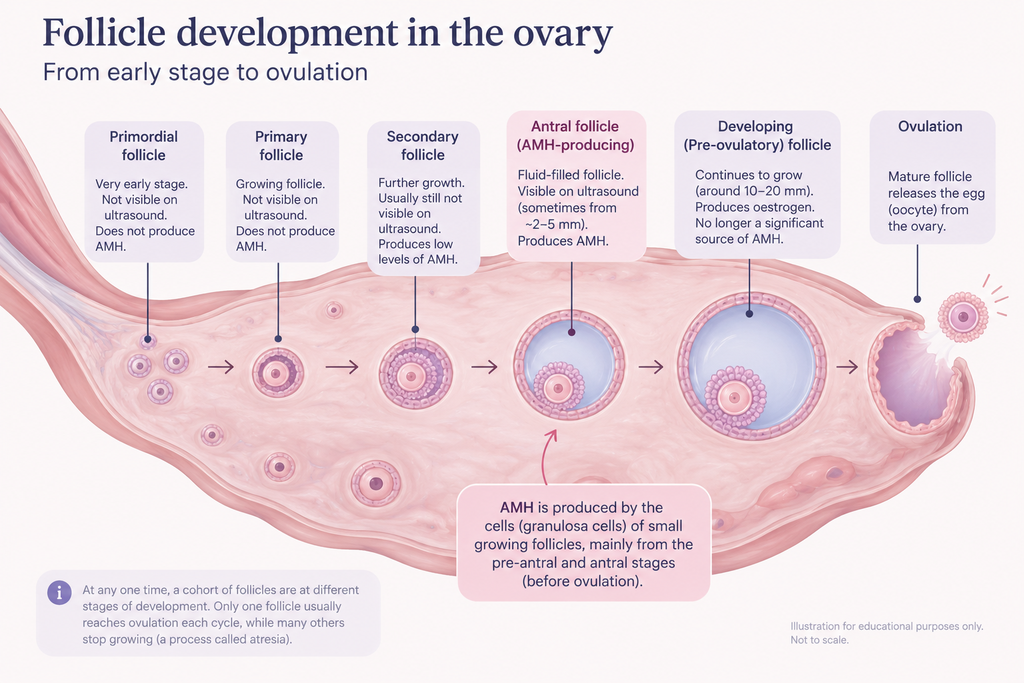
AMH level provides a snapshot of the number of eggs that are coming up to the final stage of development ready for potential selection over the next 3 months.
This can give some indication of the total ovarian reserve you may have remaining and how well you may respond to ovarian stimulation.
If you find out your AMH is lower <link to low AMH> or higher <link to high AMH> than you were expecting, you can still freeze your eggs, but your doctor may need to adapt your protocol from the standard approach to ensure the best results.
Your AMH does not tell you how likely you are to be successful if you try to conceive at that moment in time with the egg you ovulate that month, and does not give information about the quality of your eggs. Its main use is a guideline to help doctors plan for your stimulation cycle.
Some people with low AMH also have fertility problems, but having low AMH in itself does not mean you definitely have fertility problems. Similarly having high AMH does not necessarily mean you are super fertile. It’s just a useful tool to estimate how you may respond to medication during your cycle.
Want to know if your AMH is normal for your age? Find out here <Link to article about AMH ranges by age>
The AMH test can be done on any day of your cycle. Your AMH varies over time and can change from one month to the next depending how much of the protein is being given off by your early stage follicles at the time, but it is fairly consistent across the different stages of your period cycle within the same month.
Some clinics also like to check the levels of other hormones such as FSH and LH, to give a more detailed picture of your fertility.
If you have other hormones tested at the same time you’ll usually need to do the test on Day 2 or 3 of your period, as these hormones vary a lot across a month as you enter the different stages of your cycle. A reading that is perfectly normal on Day 14, for example, might look out of range for Day 3.

Find out more about how hormones change across your cycle and what a healthy level is on each Day here <link to monthly hormone cycle info>.
Other Blood Tests
Some clinics require additional blood tests to provide a comprehensive picture of your health and factors that can affect the success of your egg freezing cycle.
Many clinics check TSH, your thyroid stimulating hormone. If this is outside of normal range it can affect the way all of your bodily functions work, including those relating to fertility <link to article on thyroid disorders and affect on fertility – hypo/hyper>.
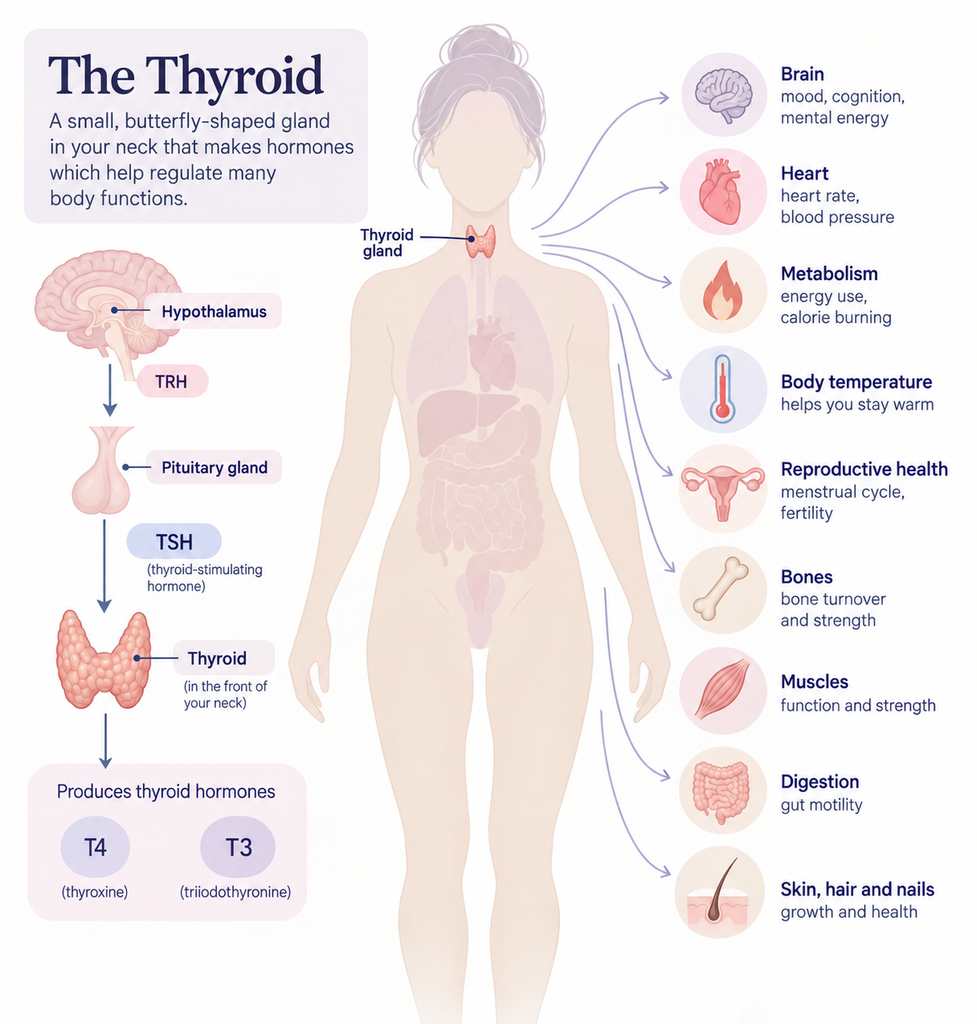
It’s ideal to have a TSH within a healthy range of 1-2.5 mIU/L before starting treatment.
Some clinics check your vitamin D level. Vitamin D is a hormone that works in synergy with the other hormones in your body and does an enormous range of jobs from bone health, to autoimmunity. Low levels can cause a falsely low AMH result.
The NHS defines low levels of vitamin D as under 50 nmol/L. These guidelines are based primarily on bone health. The ideal target amount for optimal fertility is around 100 nmol/L.
Our bodies make vitamin D naturally when exposed to the sun.

However due to the UK’s weather from November to May it’s difficult to get as much sunshine as you need to create a healthy amount of vitamin D. A 2022 government survey (source: https://www.gov.uk/government/news/new-review-launched-into-vitamin-d-intake-to-help-tackle-health-disparities) found 1 in 6 adults in the UK have low levels of vitamin D.
You can top up your natural stores using vitamin D supplements <link to article on recommended supplements for fertility>. Read more about how vitamin D can impact fertility <link to article>.
Virology Screening
In order to store all retrieved eggs safely, the HFEA requires you to submit virology screening tests to your clinic before your egg retrieval. These are usually for HIV, Hepatitis B and C, Chlamydia and Gonorrhea.
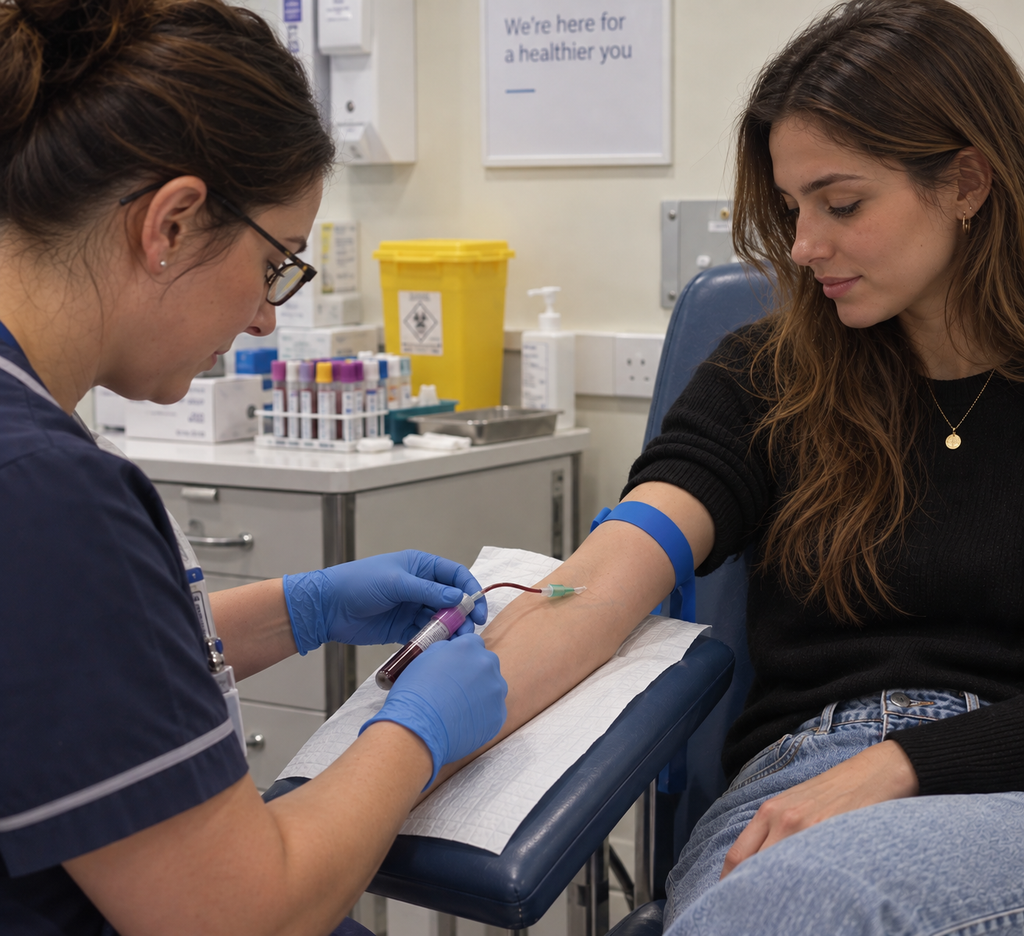
They must be taken within 3 months of your first treatment, and every 2 years if you undertake further treatments.
You can still freeze your eggs whether the results of these tests are positive or negative, they’ll just be stored separately if you have a positive result.
AFC Ultrasound Scan
As well as blood tests, you’ll have an ultrasound scan of your ovaries to check they are healthy and to count the number of follicles containing eggs that may be available for collection.
This takes place at a clinic. It might be with a doctor or nurse. You’ll lie back in a chair with stirrups, with your bottoms off.
The room will be locked and you’ll have a private place to get ready behind a curtain and position a cover over your lap before the doctor or nurse begins the scan.
To conduct the scan, a thin cylinder shaped probe is inserted into your vagina. The doctor or nurse will cover it with a protective condom for hygiene and lubricate it for your comfort. It’s sanitised to HFEA standards between patients.
The sensation may be slightly uncomfortable but it doesn’t hurt. If you’ve made it through a smear test, it’s less of a stretch than the speculum used for that!
You may feel the probe press slightly against your lower stomach as it’s gently moved in place to find the best angle to see your ovaries. Depending how full your bowels and bladder are, this may be very slightly uncomfortable at certain angles. Try to go to the loo beforehand if you can to minimize discomfort.
The probe uses ultrasound technology to display a black and white image of your ovaries on a screen. It may look a bit like this:

You have two ovaries in your lower abdomen on either side of your womb, one on the right and one on the left. The nurse or doctor performing your ultrasound will check both ovaries look healthy and count the number of follicles they can see growing on each ovary that month. This is your Antral Follicle Count, or AFC.

Each follicle is a fluid-filled sac that has the potential to grow an egg inside it during ovarian stimulation.
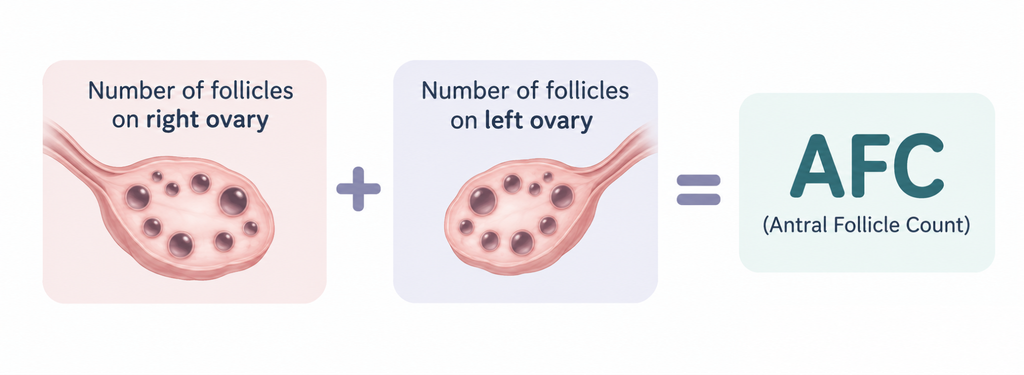
Your Antral Follicle Count provides a helpful guide for your clinic to estimate how many eggs you may be able to grow during one cycle of stimulation.
Your AFC can vary somewhat every month, but an AFC shortly before you plan to freeze your eggs will give doctors a good idea of what to expect.
In many cases it is a more accurate predictor of how many eggs you may be able to retrieve in a cycle than your AMH.
Find out how more about how ovaries work and what the average AFC for your age group is here <Link to page about AFC>
Consultation
With the information from your AMH blood test and AFC ultrasound scan, you’ll sit down for a consultation with a doctor at the clinic. They will review your results along with your other medical history and recommend a treatment plan for you.

During the consultation you’ll have the opportunity to ask any questions you may have and make sure you feel comfortable with what to expect.
Some clinics may have waiting times to book an appointment with the doctor of your choice, so make sure to allow plenty of time before the month you’d like to start your cycle to do your investigations and consultation.
Medications
When you’re happy with your treatment plan and ready to proceed with your cycle, your clinic will provide a prescription to get the medications you’ll need. You can purchase these from your clinic or from a pharmacy.
When you’ve received your medication, you’ll have an appointment with a nurse from your clinic to show you how to use it and make sure you are feeling confident about what to do.
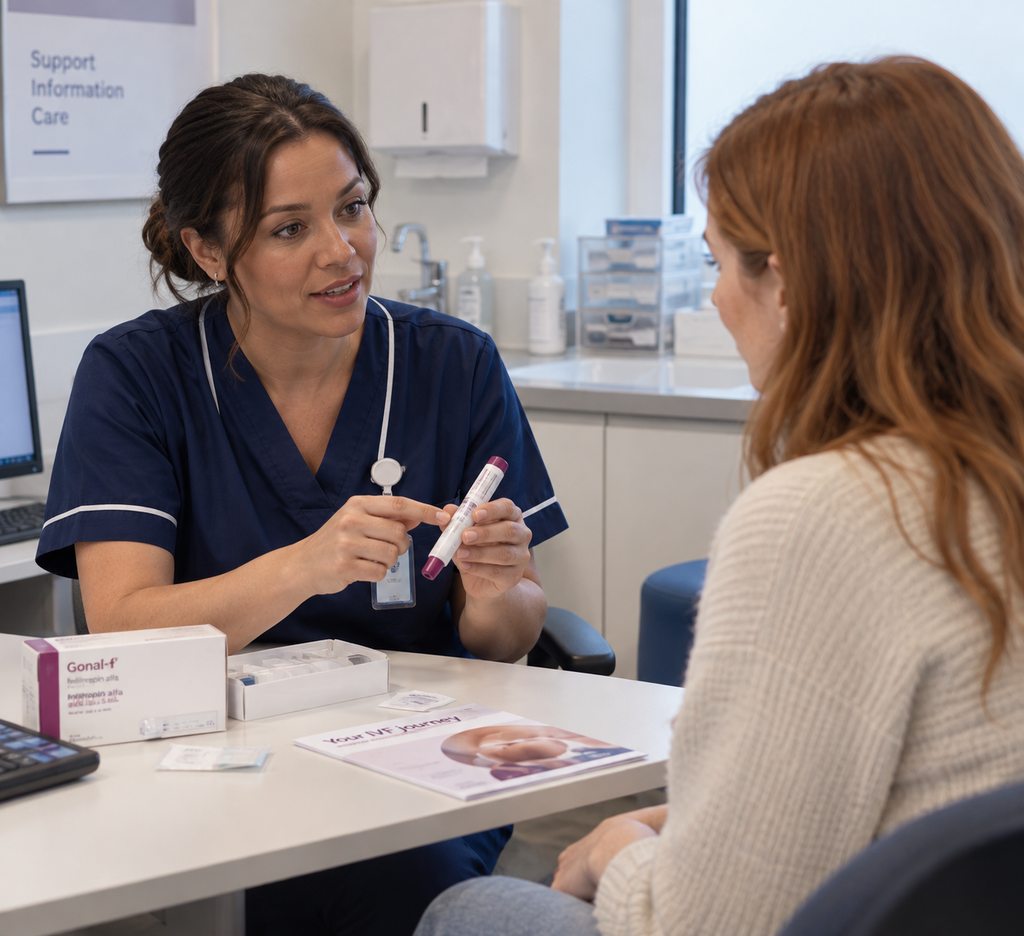
The cost of medications can vary greatly depending which medications and doses your doctor anticipates will produce the best results for you.
If you are younger or have a high ovarian reserve, medication is likely to cost a lot less than if you are older or have a lower ovarian reserve, as you are likely to need less medication to produce a good result.
The cost of medication is not usually covered in egg freezing cycle fee quotes, and can be quite substantial.
One of the great things about Egg Freeze Plan is that your medication cost is built into the plan. There won’t be any extra surprises or large costs to consider when you get your prescription. Find out more <link to plans>
What’s next?
When you’ve got your plan and medication, you’re ready to begin a cycle! Click here to read what happens next. <link to article about what happens during stimulation>